24 city / 30 highway / 26 combined — see how the CX-5 stacks up against the CR-V, RAV4, Rogue, Forester & Tucson
Are you curious about the 2026 Mazda CX-5’s fuel economy compared to others? You’re not the only one.
At Team Mazda Caldwell Idaho, we know gas mileage is key. It’s as important as performance and style in a compact SUV. That’s why we’ve made a detailed comparison to help you choose wisely.
The new CX-5 has EPA ratings of 24 city, 30 highway, and 26 combined MPG. It has a 2.5-liter four-cylinder engine that makes 187 horsepower. Plus, it comes with all-wheel drive for better handling in Idaho’s weather.
But these numbers are just the start. How does it compare to the Honda CR-V, Toyota RAV4, Nissan Rogue, Subaru Forester, and Hyundai Tucson?
In this guide, we’ll dive into the real-world fuel economy data you need. We aim to help you see if the Mazda is the best fit for your driving habits.
Want a personalized fuel-cost estimate? Call Team Mazda Caldwell at 208-455-0322 or stop by 6218 Cleveland Blvd, Caldwell, ID 83607 — we’ll run the numbers for your specific driving habits.
Fuel economy is a key factor when choosing a compact SUV. It affects how much you’ll spend on gas over time. Knowing the Mazda CX-5’s fuel economy helps you decide on your next car.
The compact SUV market is getting more competitive in fuel efficiency. Car makers must meet strict standards while keeping performance and space high. This challenge impacts design, from engines to body shape.
EPA ratings help compare vehicles fairly. The Environmental Protection Agency tests cars under controlled conditions. These tests give you a baseline, but actual results can vary based on how you drive.
The 2026 CX-5 got a major redesign. Mazda made it longer and wider, adding more space inside. This change was a big request from CX-5 owners.
But, the redesign also meant less fuel efficiency. The 2026 CX-5 now gets 26 mpg combined, down from 28. At Team Mazda Caldwell Idaho, we’re open about these changes and their impact on your drive.
The bigger size and weight of the 2026 CX-5 use more fuel. Mazda focused on comfort and safety in the redesign. Many buyers prefer these features over better fuel economy.
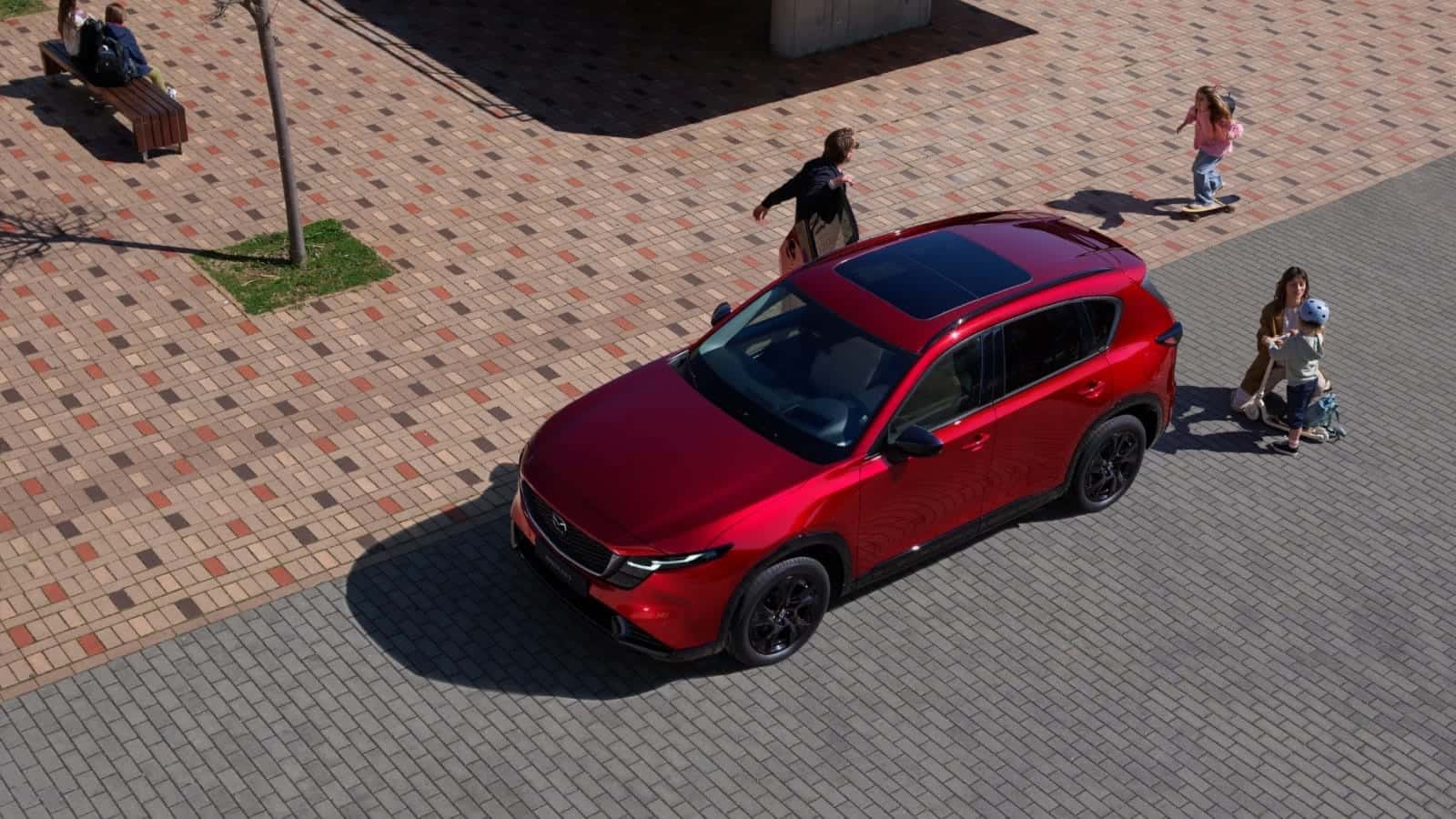
Mazda also changed the engine lineup for 2026. They dropped the turbocharged engine, leaving only a naturally aspirated option. This engine offers reliable performance and predictable fuel economy.
Remember, EPA ratings are for lab tests. Real-world driving adds variables like traffic and weather. Your actual fuel efficiency will depend on these factors.
Mazda is introducing a hybrid CX-5 for 2027. This will boost fuel efficiency for those who care most about economy. If you need a car now, the 2026 model is a good choice in the non-hybrid segment.
The fuel economy scene is always changing with new tech. Car makers are working on better engines, aerodynamics, and lighter vehicles. The 2026 Mazda CX-5 shows the balance between tech, space, safety, and driving feel for families.
Your 2026 Mazda CX-5 has EPA-certified fuel consumption ratings. These numbers show how well the car does in real driving. Knowing these ratings helps you figure out fuel costs and plan your budget.
The 2026 Mazda CX-5 uses a 2.5-liter four-cylinder engine. It makes 187 horsepower and 186 lb-ft of torque. The car also has all-wheel drive and a six-speed automatic transmission for better power use.
Here’s a quick overview of the key specifications that influence mazda cx-5 fuel consumption:
The 2026 mazda cx-5 starts with an EPA rating of 24 mpg in city driving. This is for driving in the city with lots of stops and starts. It’s affected by traffic lights, congestion, and slower speeds.
In Caldwell and the Treasure Valley, city driving mixes suburban and urban routes. This means more fuel used due to frequent stops. The CX-5’s engine is designed to be efficient even in these conditions.
Car and Driver tested the CX-5 and found it matches the EPA city estimate. This shows the accuracy of the manufacturer’s specs. Your actual fuel use can vary based on how you drive and local traffic.
On Idaho highways, the CX-5 gets an impressive 30 mpg, according to the EPA. Highway driving lets the engine work at its best, with steady speeds and less braking. The car’s design also helps it use less fuel at high speeds.
The six-speed automatic transmission helps with highway efficiency. It keeps the engine at the best speed for cruising. This means less fuel used at high speeds.
All-wheel drive might seem like it would use more fuel, but Mazda’s design helps. It only uses the rear wheels when needed. This keeps the car light and efficient.
| Driving Condition | EPA Rating | Engine Operation | Key Factors |
|---|---|---|---|
| City Driving | 24 mpg | Frequent acceleration cycles | Stop-and-go traffic, lower speeds |
| Highway Driving | 30 mpg | Steady-state cruising | Aerodynamics, optimal rpm range |
| Combined Use | 26 mpg | Mixed acceleration patterns | 55% city, 45% highway weighting |
The combined fuel economy rating is 26 mpg. This is a mix of city and highway driving. It’s based on how most drivers use their cars.
This rating gives a good idea of fuel costs for daily driving. It includes commuting, weekend trips, and some highway driving. The CX-5’s rating puts it in a good spot in the compact SUV market.
Knowing the CX-5’s MPG ratings helps you estimate fuel costs. At today’s prices, it’s easy to see how much you’ll spend each week or month. This info is useful when comparing the CX-5 to other cars.
The Atkinson-cycle engine in the CX-5 is designed to get the most energy from each gallon of fuel. It balances power and efficiency well. You get good acceleration when you need it and decent fuel economy in normal driving.
When looking for a fuel-efficient compact SUV, the Honda CR-V and the 2026 Mazda CX-5 are top choices. The CR-V is known for its fuel economy. It’s often the go-to for those who want to save on gas.
Comparing these two vehicles is more than just looking at numbers. This comparison shows how they differ in engineering and value. Both offer great benefits, but in different ways.
The Honda CR-V has impressive EPA ratings, making it a leader in fuel economy. Honda offers different powertrain options, achieving 29-30 mpg combined. This is better than the CX-5’s 26 mpg combined rating.
Honda focuses on efficiency with its continuously variable transmission. The CR-V’s engine is tuned for fuel savings in all driving conditions. Car and Driver gives the CR-V a perfect 10/10 score, while the CX-5 gets an 8/10.
The CR-V starts at $32,370, a bit more than the CX-5’s $31,485. This price difference reflects different standard features. Yet, both offer great value in their class.
Comparing fuel economy between these SUVs shows their strengths. The differences depend on your driving habits. Let’s see how the CX-5 compares in different scenarios.
The 2026 Mazda CX-5 gets 24 mpg in the city. The Honda CR-V does better, reaching 27-28 mpg. This 3-4 mpg difference means more savings on your daily commute.
For those driving 12,000 miles a year, mostly in the city, this difference is huge. You could save $75-100 a year with the CR-V. The CR-V’s CVT helps keep engine speeds right during city stops.
On highways, the gap narrows. The CX-5 gets 30 mpg, while the CR-V reaches 32-33 mpg. This makes the CX-5 a better choice for long drives.
Both SUVs are efficient on long trips. The CX-5’s six-speed automatic is smooth at high speeds. Many like its quick acceleration on highways.
The Honda CR-V has a clear fuel economy advantage. Its 29-30 mpg combined rating beats the CX-5’s 26 mpg. This is true for both city and highway driving.
But, don’t just look at numbers. The CX-5 offers better driving dynamics. Its handling and interior materials make for a premium experience.
The CX-5 also comes with standard all-wheel drive. This costs extra on the CR-V. This changes the value comparison when comparing similar models.
| Feature | 2026 Mazda CX-5 | Honda CR-V |
|---|---|---|
| Combined MPG | 26 mpg | 29-30 mpg |
| City MPG | 24 mpg | 27-28 mpg |
| Highway MPG | 30 mpg | 32-33 mpg |
| Base Price | $31,485 | $32,370 |
| Standard AWD | Yes | No (FWD standard) |
Think about more than just fuel efficiency when choosing. If saving gas is your main goal, the CR-V is the better choice. But if you want a better driving experience, interior quality, and standard AWD, the CX-5 is worth considering.
The Toyota RAV4 is known for its great fuel efficiency. It’s a strong competitor to the Mazda CX-5. The RAV4 has different powertrain options to meet various needs.
The 2026 RAV4 got updates to improve its efficiency. Car and Driver gave it an 8.5 out of 10. This shows its strong performance and value.
The 2026 RAV4 comes in gasoline, hybrid, and plug-in hybrid versions. The gasoline RAV4 has fuel economy similar to the CX-5. It gets around 28-30 mpg combined.
The RAV4 Hybrid is where Toyota really stands out. It gets 38-43 mpg combined, depending on the trim. This is way better than the CX-5.
The RAV4 Prime plug-in hybrid goes even further. It gets 94 MPGe in electric mode. After using the battery, it gets 38 mpg in hybrid mode. Toyota’s hybrid tech is top-notch.
Comparing the Mazda CX-5 to the RAV4 Hybrid shows a big difference. The CX-5 gets about 26 mpg combined. The RAV4 Hybrid gets up to 41 mpg combined.
For those driving 15,000 miles a year, the RAV4 Hybrid saves a lot of money. At $3.50 per gallon, you’d spend $1,280 less a year. That’s $739 saved annually.
But, the RAV4 costs more than the CX-5 at the base price. The RAV4 Hybrid is even pricier. You’d need to drive it for nearly three years to save enough on fuel to break even.
Choosing between Toyota and Mazda is more than just fuel efficiency. The CX-5 is better at driving, feels more premium, and handles better. Many prefer its driving experience.
| Vehicle Specification | 2026 Mazda CX-5 | 2026 Toyota RAV4 Gas | 2026 Toyota RAV4 Hybrid |
|---|---|---|---|
| Combined MPG | 26 mpg | 29 mpg | 41 mpg |
| Starting MSRP | $31,450 | $33,495 | $36,500 |
| Annual Fuel Cost | $2,019 | $1,810 | $1,280 |
| Car and Driver Rating | 8.0/10 | 8.5/10 | 8.5/10 |
The Toyota RAV4 Hybrid has a big advantage over the CX-5. Mazda doesn’t offer a hybrid CX-5 for 2026. Toyota has been perfecting hybrids for over 20 years.
Toyota’s hybrid system combines a gasoline engine with electric motors. It offers better fuel economy without losing practicality. The system regenerates energy and can run on electricity alone at low speeds.
At Team Mazda Caldwell Idaho, we know this. If you want the best fuel efficiency, the RAV4 Hybrid is the choice. But, Mazda will introduce a CX-5 Hybrid for 2027, closing the gap.
Don’t just look at fuel efficiency. The CX-5 has better driving dynamics and a more upscale interior. It also handles better, making driving more fun.
Think about your driving habits when choosing. If you drive long distances, the RAV4 Hybrid saves a lot of money. But, if you value driving fun, the CX-5 is a great value despite using more fuel.
When you compare the 2026 Mazda CX-5 fuel specs to the Nissan Rogue, you see two different ways to save fuel. Both SUVs aim to be fuel-efficient without losing power. Their engines show how makers try to save fuel in different ways.
This comparison with the Nissan Rogue shows what makes each SUV special. Your choice depends on what you value more. Let’s look at how these SUVs do in real-world fuel use.
The Nissan Rogue uses a special engine that changes its compression ratio. This change happens based on how you drive. It helps the engine use less fuel in different situations.
The Rogue’s engine makes 201 horsepower and 225 lb-ft of torque. It gets good fuel numbers for its class. Its special transmission works with the engine to save fuel.
The Rogue is good in the city but a bit less efficient with all-wheel drive. Your fuel use will depend on your driving and the Rogue’s setup.
The Mazda CX-5 gets 24 mpg city, 30 mpg highway, and 26 mpg combined. This is for the front-wheel-drive model with a 2.5-liter engine.
The Nissan Rogue also gets good fuel numbers. Front-wheel-drive models get up to 33 mpg combined. All-wheel-drive models get slightly less, around 31 mpg combined.
These differences can save you money over time. If you drive 15,000 miles a year, you could save $200-$400. Your savings depend on how much you drive in the city versus on the highway.
| Specification | 2026 Mazda CX-5 | Nissan Rogue FWD | Nissan Rogue AWD |
|---|---|---|---|
| Engine Type | 2.5L 4-Cylinder | 2.5L VC-Turbo 3-Cylinder | 2.5L VC-Turbo 3-Cylinder |
| Horsepower | 187 hp | 201 hp | 201 hp |
| City MPG | 24 mpg | 30 mpg | 28 mpg |
| Highway MPG | 30 mpg | 37 mpg | 35 mpg |
| Combined MPG | 26 mpg | 33 mpg | 31 mpg |
Mazda’s Skyactiv engine is all about making the most of traditional engines. It uses high compression ratios and less friction. This approach gives reliable performance without being too complicated.
Nissan’s variable compression engine is more advanced. It changes compression ratios on the fly to balance power and fuel use. This helps save fuel on long drives and keeps power up when you need it.
At Team Mazda Caldwell Idaho, we love the CX-5’s Skyactiv engine. It’s simple, reliable, and efficient. You get consistent fuel economy and Mazda’s reputation for quality and fun driving.
Both the CX-5 and Subaru Forester are popular in Idaho for their all-wheel drive. They have similar prices and AWD features. For those in Caldwell, knowing how they compare in fuel efficiency is key.
The Subaru Forester starts at $31,445, close to the CX-5’s base price. Both SUVs have all-wheel drive in every trim, so you can’t save money by choosing front-wheel drive.
The Subaru Forester gets EPA ratings of 26-29 mpg combined, depending on the trim. Car and Driver gives it a 7.5 out of 10 for performance and value. This puts it in a close race with the CX-5’s fuel economy.
Subaru uses a boxer engine in the Forester. This engine is positioned lower than traditional engines. It improves handling but affects fuel use differently than the CX-5’s engine.
The boxer engine’s design requires special engineering. Its horizontal combustion chambers affect fuel burning efficiency in various driving conditions.
Both SUVs lose some efficiency to front-wheel drive rivals because of AWD’s added weight and complexity. Yet, their AWD systems work in different ways. Knowing these differences helps explain fuel use variations.
Mazda’s i-Activ AWD predicts road conditions and engages rear wheels before slipping. It runs in front-wheel drive mode normally. This approach boosts efficiency while keeping traction when needed.
Subaru’s Symmetrical AWD sends power to all four wheels continuously. This system keeps traction but uses more energy. It affects fuel economy differently than Mazda’s system.
| Feature | Mazda CX-5 | Subaru Forester |
|---|---|---|
| AWD System Type | On-demand predictive | Full-time symmetrical |
| Combined EPA Rating | 26 mpg | 26-29 mpg |
| Starting Price | $31,200 | $31,445 |
| Engine Configuration | Inline 4-cylinder | Horizontally opposed boxer |
EPA ratings are useful, but real-world MPG varies. Idaho’s driving conditions pose unique challenges. These affect both SUVs more than lab tests do.
Driving in mountains requires more power, lowering efficiency in both SUVs. Caldwell drivers should expect lower MPG than EPA ratings in mountainous areas. Winter conditions also require more AWD use, impacting fuel consumption.
High-altitude driving affects efficiency too. Thinner air at higher elevations means engines work harder. Our customers in Caldwell, Idaho, report varied experiences based on their driving habits.
Weather greatly impacts fuel economy. Cold weather means longer warm-ups and thicker fluids. Hot weather increases air conditioning use, reducing engine efficiency in both the CX-5 and Forester.
The 2026 cx-5 gas mileage story gets more interesting when compared to the Hyundai Tucson. Both are compact SUVs with similar prices and sizes. But, they have different ways of making power.
The Tucson starts at $31,050, which is a bit cheaper than the CX-5. Car and Driver gives the Tucson an 8/10 rating. This shows it’s a strong choice. When shopping in Caldwell, Idaho, knowing these differences helps you choose wisely.
Hyundai offers the Tucson with several engine options. This lets you choose based on what you need. The EPA rates the Tucson at 26-28 mpg combined, matching the CX-5’s rating.
The base Tucson has a 2.5-liter four-cylinder engine. It offers reliable performance and good fuel efficiency. Hyundai also has turbocharged options for more power.
Here’s how the Tucson’s efficiency ratings vary:
With these options, you can choose between fuel economy and performance. Each engine has its own strengths in acceleration and efficiency.
When comparing the 2026 Mazda CX-5 to the Hyundai Tucson, they show similar efficiency. The CX-5 gets 25 mpg city and 31 mpg highway with front-wheel drive. The base Tucson gets 26 mpg city and 33 mpg highway, giving it a slight edge.
These small differences mean only a few dollars in cost over time. With Idaho’s fuel prices at $3.50 per gallon, the difference is about $50-75 a year. Both cars need similar amounts of gas for daily driving and weekend trips.
The fuel tank sizes are also similar:
| Vehicle | Tank Capacity | City Range | Highway Range |
|---|---|---|---|
| 2026 Mazda CX-5 | 15.3 gallons | 382 miles | 474 miles |
| Hyundai Tucson | 14.3 gallons | 372 miles | 472 miles |
| Difference | 1.0 gallon | 10 miles | 2 miles |
Both vehicles can travel similar distances on a full tank. This is important for trips from Caldwell to Boise or longer journeys. Neither car needs more frequent refueling.
An important difference in the Hyundai Tucson comparison is the availability of turbocharged engines. The 2026 Mazda CX-5 does not have a turbocharged option. Previous CX-5 models had a turbocharged 2.5-liter engine for more power but slightly lower fuel economy.
Hyundai keeps turbocharged options in the Tucson lineup. Modern turbo technology improves fuel economy under light throttle but boosts acceleration when needed. It forces more air into the engine for better combustion.
The choices between naturally aspirated and turbocharged engines include:
At Team Mazda Caldwell Idaho, we explain that the CX-5’s naturally aspirated engine offers consistent power and good efficiency. If you want more power, the CX-50 has turbocharged options. The CX-5 focuses on balanced performance and straightforward engineering, appealing to many for its reliability and predictability.
Many things can change how much fuel your Mazda CX-5 uses. Car and Driver found 24 mpg in real-world tests, matching the EPA city rating. But, your actual fuel use depends on how you drive, where you drive, and how well you care for your car.
Knowing what affects your CX-5’s fuel efficiency gives you control. Making small changes can lead to big savings at the gas pump over time.
Your driving habits are key to fuel use. How you accelerate, brake, and speed can change your fuel use by 10-30 percent. Aggressive driving uses more fuel.
Driving smoothly and gradually is better for fuel. Accelerate gently and avoid hard braking. This keeps your engine running efficiently.
Choosing the right speed is also important. Most cars, like the CX-5, use the least fuel at 45-55 mph. Faster speeds increase drag and lower fuel economy.
Here are tips for better fuel use on your daily drive:
Weather and terrain can also affect your CX-5’s fuel use. Idaho’s varied landscape and cold weather are big factors.
Cold weather makes your engine work harder. It takes longer to warm up, fluids are thicker, and battery efficiency drops. You also use more climate control.
Idaho’s mountains are tough on fuel efficiency. Climbing hills uses more power, while going down can help a bit. Wind resistance is also a challenge on open highways.
Here’s how weather and terrain affect your fuel use:
Regular maintenance is key to good fuel economy. Neglecting it can lower your CX-5’s mpg ratings without you noticing.
Tire pressure is critical. Underinflated tires increase resistance and can cut fuel economy by up to 3 percent. Check it monthly, more often in changing weather.
Engine maintenance is also important. Dirty air filters and worn spark plugs make your engine work harder. Using the wrong oil viscosity increases friction.
Here are tips for better maintenance:
Fuel economy changes with the seasons. Summer is usually the best, while winter is the worst, even with the same driving habits.
In warm weather, engines warm up faster. Thinner fluids and less climate control use help efficiency in summer.
Cold weather has the opposite effect. Longer warm-ups, thicker fluids, and more heater use all lower efficiency. You might see a 10-20 percent drop in winter compared to summer.
At Team Mazda Caldwell Idaho, we help keep your CX-5 efficient all year. Our technicians know Idaho’s driving conditions and can suggest seasonal adjustments.
EPA numbers give a starting point, but your real-world experience with the 2026 Mazda CX-5 will vary. This is due to how and where you drive. Knowing these differences helps you plan your fuel budget better.
The gap between official ratings and actual results doesn’t mean the numbers are wrong. It shows the difference between lab tests and everyday driving.
Most drivers see their results in a predictable range. Your experience depends on climate, traffic, and driving style.
The Environmental Protection Agency tests fuel economy in controlled labs. These tests don’t match every real-world situation. They happen at specific temperatures with no wind or extreme weather.
Real-world driving is different. Stop-and-go traffic, cold starts, and air conditioning use affect fuel economy more than lab tests.
Car and Driver tested the 2026 Mazda CX-5 and got 24 mpg. This matches the EPA city rating. The EPA says it gets 24 mpg city, 30 mpg highway, and 26 mpg combined.
Highway driving often beats EPA estimates when speeds are steady. City driving might fall short in traffic.
Cold weather affects fuel economy. Engines take longer to warm up. Heated seats and defrosters also use more power.
Feedback from CX-5 owners gives insight into real-world fuel economy. These results show a wider range than EPA numbers. This reflects different driving environments and habits.
Our customers at Team Mazda Caldwell Idaho report experiences that match these patterns. Owner-reported actual MPG usually falls within certain ranges:
These ranges reflect data from various climates and driving conditions. Your personal results will depend on your specific situation. But most drivers find their fuel consumption falls within the mixed driving range.
A typical tank gives 350-400 miles of range for mixed driving. This means weekly refueling for most commuters covering 50-75 miles daily.
You can improve your 2026 Mazda CX-5 mpg with simple adjustments. These strategies require minimal effort but deliver measurable improvements in real-world fuel economy.
Start with these proven techniques:
The CX-5 has instrument cluster displays that provide real-time feedback on fuel consumption. Pay attention to these readouts as you drive. You’ll quickly learn which habits help and which hurt your miles per gallon.
Small changes add up over time. Improving your average from 25 to 27 mpg saves approximately $150 annually based on 12,000 miles and $3.50 per gallon. These improvements don’t require sacrificing driving enjoyment or significantly changing your routine—they simply make your driving smoother and more efficient.
Mazda engineers have made the 2026 CX-5 more fuel-efficient without losing performance. This compact SUV has a system that cuts down fuel use on every drive. Mazda has spent years perfecting powertrains that are both fun to drive and save fuel.
The 2026 CX-5 uses new tech to improve efficiency. Mazda has worked on many areas, from how the engine burns fuel to the car’s aerodynamics. These efforts help the CX-5 get good MPG ratings.
The CX-5’s engine is a 2.5-liter Skyactiv-G four-cylinder. It makes 187 horsepower and 186 lb-ft of torque. Mazda’s Skyactiv technology makes every drop of fuel count.
The engine’s high compression ratio gets more power from fuel. This design improves engine efficiency. The piston cavity helps burn fuel better, reducing waste.
The engine also uses direct fuel injectors. These spray fuel at high pressure into the combustion chamber. This leads to better fuel economy and cleaner emissions.
The Atkinson-cycle operation is another efficiency feature. It reduces the compression ratio when you don’t need full power. This helps a lot during steady cruising.
The six-speed automatic transmission helps too. It keeps RPMs low on the highway. This reduces friction and saves fuel.
Cylinder deactivation is a way to save fuel. It shuts down half the engine’s cylinders when driving light. This makes the engine act like a two-cylinder when cruising.
The 2026 Mazda CX-5’s engine focuses on other efficiency tech. Mazda wants smoothness and driver engagement. The Skyactiv technology helps achieve great fuel economy.
Some rivals use cylinder deactivation. But Mazda focuses on advanced combustion and less friction. This keeps the driving feel you expect from Mazda.
The 2026 CX-5’s new look is also about function. Mazda has made every part to reduce drag. This improves fuel economy on the highway.
The front fascia directs airflow smoothly. The underbody panels also help reduce drag. These features make the CX-5 more fuel-efficient.
The rear spoiler and tailgate manage airflow. This reduces drag and makes the engine work less hard. These details are key for long-distance driving.
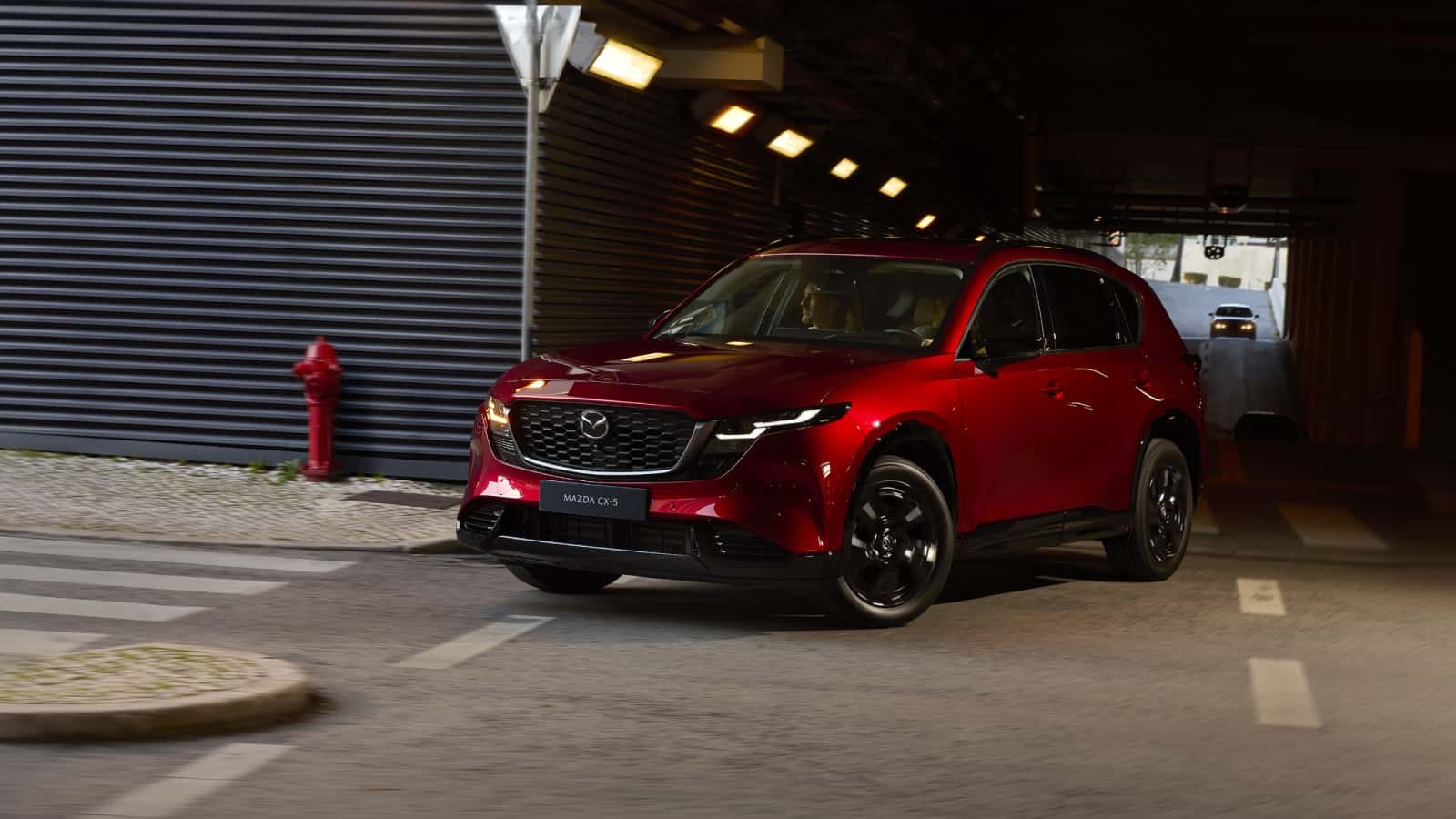
At Team Mazda Caldwell Idaho, we love Mazda’s focus on driving experience. The Skyactiv tech, smart transmission, and aerodynamics make the CX-5 great for both fun and fuel economy.
The 2026 Mazda CX-5’s MPG ratings mean big savings at the pump. Knowing these costs helps you make a smart choice that fits your budget. Fuel expenses are a big part of owning a car.
When looking at the CX-5’s efficiency, think about both immediate fuel costs and long-term expenses. Seeing actual dollar amounts makes the financial picture clearer. This helps you understand the true cost of owning and operating the CX-5.
Your yearly fuel expenses depend on your driving and local gas prices. Using Caldwell, Idaho prices and the CX-5’s 26 mpg rating, you can estimate yearly costs. This gives you a clear picture of your fuel budget.
Here’s what typical drivers can expect to spend annually on fuel:
These calculations break down to manageable monthly amounts. A driver covering 15,000 miles annually spends about $168 per month on fuel. This helps you budget effectively and understand the real-world impact of the CX-5’s efficiency.
Compared to competitors, the CX-5 offers competitive fuel cost savings. The Honda CR-V’s slightly better fuel economy saves you approximately $80-$120 annually. The CX-5 offers similar annual costs to the Nissan Rogue while providing superior driving dynamics.
Fuel is just one part of your total transportation budget. Smart buyers look at the whole financial picture before making a decision. The CX-5’s $31,485 starting price positions it competitively within the compact SUV segment.
Your ownership costs include several important factors:
Depreciation is usually the biggest ownership expense. Mazda vehicles hold their value well, which helps offset fuel cost differences. This long-term value preservation is a big plus.
Insurance costs for the CX-5 are moderate thanks to its safety ratings. Maintenance expenses are predictable with Mazda’s reliability. These factors make the CX-5 a good value beyond just MPG comparisons.
Looking at a typical five-year ownership period shows the impact of fuel efficiency. This longer timeline helps you understand the true financial commitment of your vehicle choice. The analysis assumes consistent driving patterns and adjusts for modest fuel price fluctuations.
For a driver covering 15,000 miles annually, the five-year fuel expense totals approximately $10,095. This calculation uses current Idaho fuel prices and assumes moderate annual increases. Breaking this down year by year helps you plan your automotive budget effectively.
| Annual Mileage | Year 1 Cost | Year 3 Cost | Year 5 Cost | Five-Year Total |
|---|---|---|---|---|
| 12,000 miles | $1,615 | $1,695 | $1,780 | $8,460 |
| 15,000 miles | $2,019 | $2,119 | $2,225 | $10,575 |
| 18,000 miles | $2,423 | $2,543 | $2,670 | $12,690 |
Comparing these figures against more efficient competitors shows modest differences. A vehicle achieving 30 mpg combined saves roughly $1,400 over five years compared to the CX-5. But, this savings must be weighed against other factors.
Some competitors with better fuel economy have higher purchase prices. A $2,000 price premium takes years to recover through fuel cost savings. The CX-5 balances efficiency with driving enjoyment and interior quality.
At Team Mazda Caldwell Idaho, we help you understand the complete financial picture. Our team calculates personalized projections based on your specific driving habits and local fuel prices. This approach ensures you make the best decision for your budget and lifestyle priorities.
The 2026 Mazda CX-5 fuel specs make it a strong contender in its class. It gets 24 mpg city, 30 mpg highway, and 26 mpg combined. This shows it’s efficient for an all-wheel-drive compact SUV.
While it may not be the top in mpg numbers, it shines in other areas. The CX-5 offers fun driving, a high-quality interior, and great value. This makes it a top choice for many.
How much fuel the CX-5 uses depends on your driving, where you live, and how well you maintain it. It stands out in areas like handling, comfort, and tech features. These are key for many buyers.
Team Mazda Caldwell Idaho invites you to try out the 2026 Mazda CX-5. Our team at 6218 Cleveland Blvd, Caldwell, ID 83607 can help with your questions. They can talk about fuel economy, what’s in stock, and financing.
Visit us to see if the CX-5 meets your needs. It’s a mix of fuel efficiency, fun driving, and value. Contact Team Mazda Caldwell Idaho to see what’s right for you.
The 2026 Mazda CX-5 gets 24 mpg in the city, 30 mpg on the highway, and 26 mpg combined. This is with the standard Skyactiv-G 2.5-liter engine and a six-speed automatic transmission. All-wheel drive is standard. Your actual fuel use can vary based on how you drive, the terrain, and the weather.
The Honda CR-V gets better fuel economy, with ratings of 29-30 mpg combined. It’s about 5-6 mpg better in the city. But the CX-5 offers better driving, more premium interior, and standard all-wheel drive at a lower price. It’s a great choice for those who value these features and good fuel efficiency.
No, the 2026 Mazda CX-5 does not have a hybrid engine. Mazda will introduce a CX-5 Hybrid for 2027. If you need a hybrid, consider the Toyota RAV4 Hybrid or Honda CR-V Hybrid. Or wait for the 2027 CX-5 Hybrid at Team Mazda Caldwell Idaho.
Your annual fuel costs depend on your driving habits and local fuel prices. Based on the CX-5’s 26 mpg combined rating, a driver covering 15,000 miles annually will spend about $1,900-$2,300 on fuel per year. This can vary based on gas price changes.
At Team Mazda Caldwell Idaho, we can give you a personalized estimate based on your driving patterns.
Yes, your driving habits can improve your Mazda CX-5’s fuel economy. Smooth acceleration, maintaining steady speeds, and avoiding excessive idling can help. The CX-5’s instrument cluster provides real-time fuel economy feedback to help you develop more efficient driving habits.